
Makers of Slovenia: Lace, Clay, and Honey in Living Tradition
Routes From Alps to Adriatic
Northern Highlands: Idrija and Radovljica
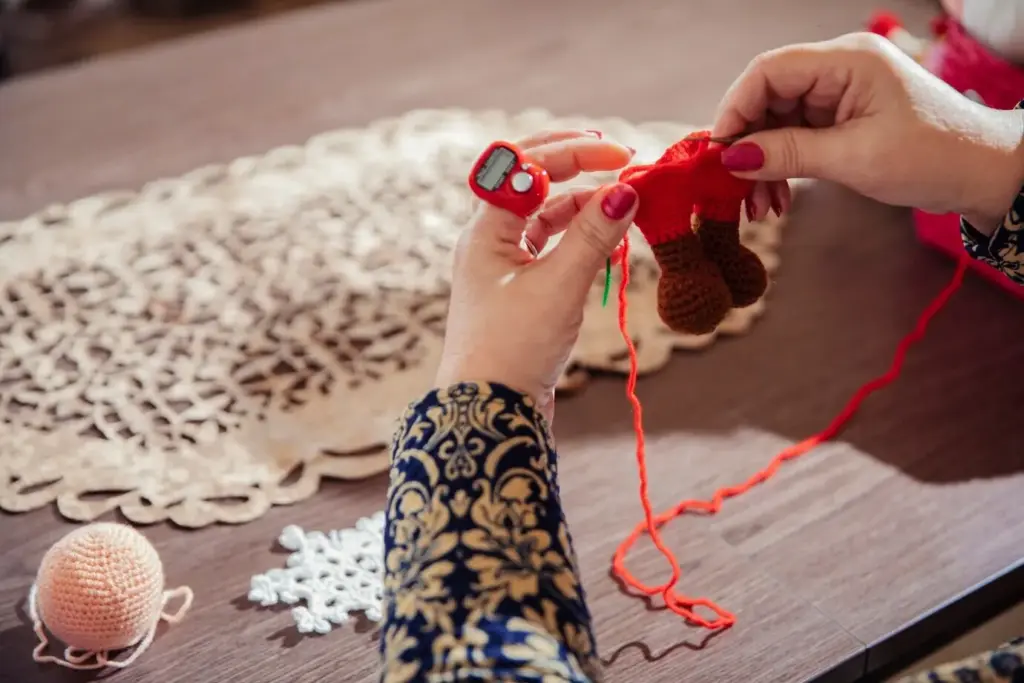
Begin where bobbins click like soft rain in Idrija, an old mining town now celebrated for lace so delicate it seems to float. Then continue toward Radovljica, where the Beekeeping Museum reveals painted hive panels and Anton Janša’s legacy. Keep space in your schedule for a roadside café, mountain views, and a friendly artisan who loves unexpected visitors.
Heart of Clay: Filovci and Prekmurje Fields
Glide east across the Mura River into thatched-roof Filovci, where black pottery emerges from smoke-fired pits like stars from dusk. Potters shape vessels inspired by daily life, grain, and harvest. Ask about firing days, respect workshop rhythms, and savor Prekmurska gibanica afterward, letting flaky layers echo the quiet patience of hands guiding spinning clay.
Coastal Finale: Piran and Salt, Sweet Honey Pairings
End by the sea with terracotta stalls, citrus-kissed breezes, and views toward the Sečovlje salt pans. Pair local honey with young goat cheese, discover ceramic spoons made for careful drizzles, and watch the sunset burnish roof tiles. Buses trace karst cliffs, gulls wheel overhead, and your tote grows heavier with memories shaped by salt, sweetness, and time.
Threads That Speak: Lace as Living Art
The Idrija Knot and Memory in Wood
Workshop Etiquette and Joyful Mistakes
From Pattern to Heirloom
Shaping with the River Mura’s Rhythm
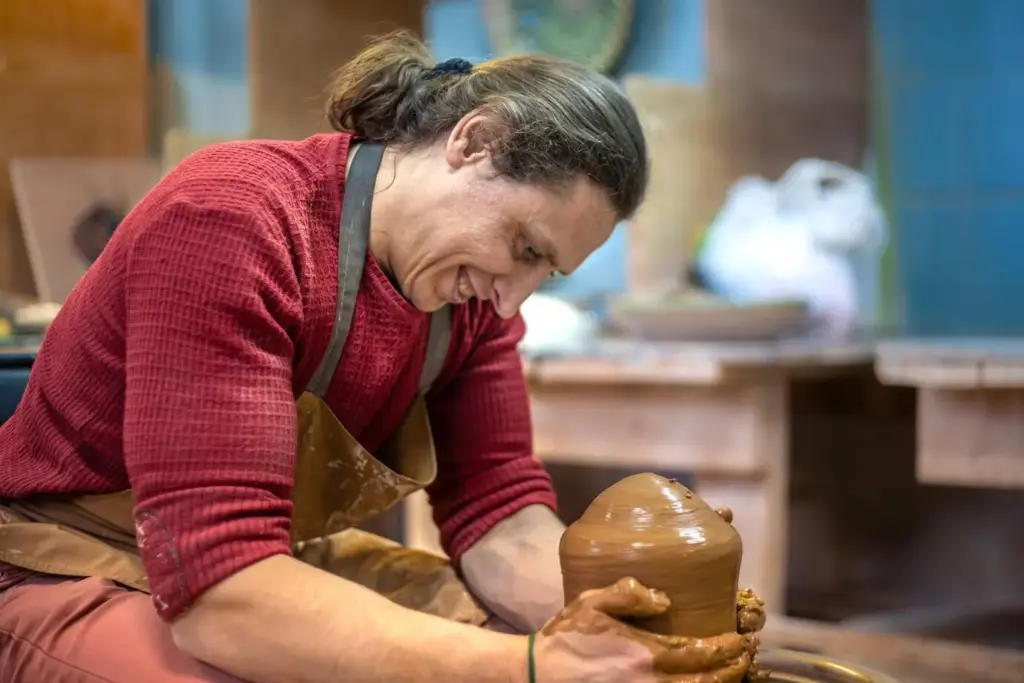
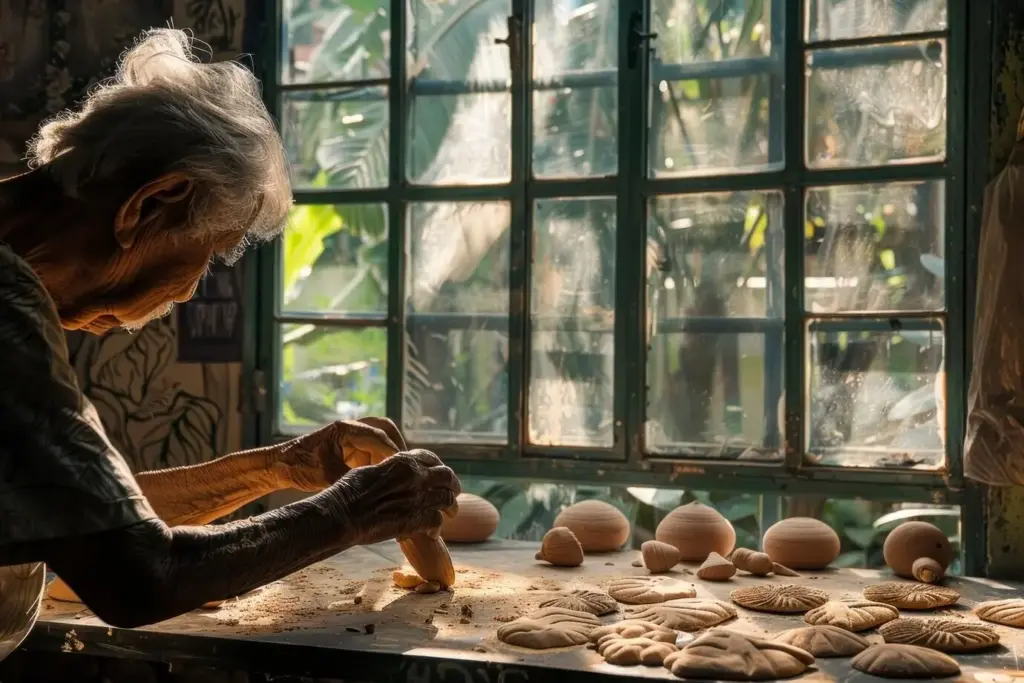
Local clay, dug with restraint and gratitude, meets water until it turns silky and loyal. As the wheel spins, shoulders relax and listening begins: pressure here, a breath there, the rim coaxed outward like a horizon. Your first bowl will wobble, yet tea will taste kinder in it. Imperfection teaches balance, anchoring the memory of turning earth.
Smoke-Fired Beauty and Care at Home
Black pottery carries soft sheen without glaze, seasoned by straw, wood, and darkness. Use for dry goods, flowers, or quiet corners needing presence. Rinse gently, avoid drastic temperature shocks, and celebrate patina as years add their own smoke. When guests ask, tell them about ash-scented mornings, kiln whispers, and the humble miracle of clay surviving flame.
Designs Rooted in Everyday Life
Handles curve for hands that carry soup and stories. Motifs echo wheat, rivers, and woven fences. No flourish feels idle; everything answers a need—pouring, storing, serving, sharing. Ask makers about ancestral forms, then notice how contemporary lines still respect hearth and harvest. Craft changes gently, like dialects, while remaining fluent in nourishment, gratitude, and welcome.
Guardians of the Hive: Sweet Science
Meeting the Carniolan Bee, Calm and Industrious
Painted Panels and Stories on Wood
Tasting Flight: Linden, Chestnut, Forest Honey
What to Pack for Lace, Clay, and Hives
Respectful Photography and Communication
Timing, Transit, and Weather Wisdom
Sustaining Traditions, Supporting People

Buying with Purpose and Provenance
Small Actions, Big Ripples
All Rights Reserved.